Playground equipment in winter: what to protect
Frost does not harm a carousel. What harms it is the salt somebody spread on the path two metres away, and the ice that turned the impact attenuating surfacing into a slab.
The phone call comes as the first frosts arrive: does the carousel need covering for the winter. The answer is short and it is the same every time, but the question that should be asked instead is a different one. What happens to the surfacing under the unit once it freezes.
Galvanised, powder coated steel equipment is neither dismantled nor covered for the winter. The coating is designed for year-round exposure, and a tarpaulin holding moisture against the surface does more harm than frost does. The real cold-weather risks are three: frozen impact attenuating surfacing, salt carried in from de-iced paths, and water standing where it can freeze.
What the cold does not do to a steel carousel
Steel is indifferent to sub-zero temperatures. The structure contracts by a fraction of a millimetre and returns to size when it warms, which on playground equipment has no practical consequence at all. Powder coating cured in an oven keeps its adhesion in frost, and the layer of zinc underneath protects the steel whatever the season.
What does cause harm is the thing nobody expects: wrapping the unit in sheeting or a tarpaulin. Water vapour condenses underneath, a zone of permanent damp forms against the surface, and that is exactly where corrosion starts at any point the coating is broken. A carousel that rain rinses and wind dries is in a better position than one wrapped in canvas for four months.
Dismantling for the winter makes no sense either. Every strip-down and rebuild risks damage to threads, coating and geometry, and the foundation stays in the ground regardless. The one exception is swing seats. If the site is closed anyway, taking them off the hangers reduces the risk of vandalism and saves the rubber.
What to do before the first hard frost
The autumn walk round is the moment to close out the small jobs that slipped during the season. Four of them matter:
- Seal every chip in the paint. This is the last stretch of dry, warm weather, and a touch-up applied to damp metal will lift in sheets at the first frost.
- Find anywhere water can stand. Blocked perforations in the platform, clogged drainage and dents left by impacts hold water, which freezes and expands. Perforated sheet is there to shed that water, but leaves and sand can seal it.
- Tighten the bolted connections and replace missing dome nuts. Nobody will do this in freezing weather, because the spanner sticks to your hand and the bolt to its thread.
- Top the impact attenuating surfacing back up to depth. Sand and wood chips compact through the season, and levelling them once the ground is frozen is far harder.
The full list of routine tasks, split into monthly and annual work, is in the article on carousel maintenance.
The surfacing is the bigger problem, not the equipment
Impact attenuation depends on the ground being able to deform. Frozen sand, frozen wood chips and an iced-over grass surface do not deform at all. Equipment that meets EN 1177 for most of the year stops meeting it during a hard freeze, even though nobody has changed anything about it.
This applies to every unit with a free fall height above 60 cm, because that is the threshold at which the standard requires impact attenuating surfacing. Synthetic surfaces such as rubber tiles and wet-pour lose part of their attenuating performance in the cold as well, though less dramatically than loose materials. The differences between surface types are set out in the article on playground surfacing.
The practical conclusion for an operator is not that the site closes at the first frost. It is that when the ground is frozen and surfaces are iced, there should be a decision on record rather than a hope that nobody turns up.
Salt, grit and chlorides
Chlorides are among the most aggressive corrosion agents an outdoor steel structure meets. They will not attack intact powder coating, but anywhere the paint is broken they speed up the loss of the zinc layer underneath. The worst place is the base of the post, because that is where cleared snow ends up, where it stands longest, and where the solution has continuous contact with metal.
So on playgrounds and immediately around them, de-icing is done with sand or grit rather than salt. It costs about the same and it does not carry chlorides into the zone where the equipment stands and the children walk. If the footpath alongside the site is salted by a different department from the one that looks after the playground, that is the conversation worth having before the season starts.
Cleared snow has a second effect that is easy to miss. A heap piled next to a unit raises the ground level and reduces the effective height of the structure, and a child climbing an iced mound can reach places that were designed to be out of reach. Snow from footpaths is pushed beyond the safety zone, which means further than 2 m from the equipment.
Closing the site or keeping it open
No standard requires a playground to be closed for the winter, and there is no single right answer for every site. The decision belongs to the operator and comes down to whether the site can be kept in a usable condition through the freezing months.
In favour of staying open: children use the place all year, and a closed site tends to be climbed into anyway, with nobody supervising. In favour of closing: the attenuation is simply not there when the ground is frozen, and platforms and steps are slippery.
The middle option works well in practice. The site stays open, with a decision to suspend use during ice and heavy snowfall, announced the same way as any other notice to residents, with a sign at the entrance and an entry in the records. Taking a site out of use and writing it down are two halves of the same action, because the record is the only evidence that the operator reacted.
Rubber, plastics and slippery surfaces
The steel structure overwinters without comment, but not everything on a playground is steel. Swing seats, guards and components made of rubber or plastic harden in frost and lose part of their ability to deform. A material that gives under an impact in summer responds rigidly in the cold, and a micro-crack invisible in August can run the full width at minus ten.
That is one reason the winter walk round cannot be a glance from ten metres away. A seat is examined close up, from both sides, with particular attention around the fixing, where the stresses are highest. If the site is closed for the season, the simpler answer is to take the seats off the hangers and keep them indoors until spring.
The second issue is grip. A galvanised, powder coated carousel platform after freezing rain is a surface on which a child in winter boots has no traction at all, and the ground around the unit is frozen hard. Perforated sheet improves matters, because water drains through instead of forming a continuous sheet of ice, but it does not remove the problem. De-icing the platform itself is only worth doing on sites that are genuinely used and supervised in winter.
Seasonal schedule
| Phase | What to do | Why |
|---|---|---|
| Last dry, warm spell of the year | Paint touch-ups, tighten connections, clear perforations and drainage, top up surfacing | The final weather window in which repairs will actually bond |
| Before the first snow | Decide whether the site closes or on what terms it stays open, and sign it | The operator knows what happens before anyone has to improvise |
| Through the freezing months | Visual walk round every one to two weeks, de-ice with sand not salt, clear snow beyond the safety zone | Damage and vandalism are caught early and chlorides stay away from the units |
| After the thaw | Check for movement in the structure, washed-out ground at the foundation, coating condition at the base | Freeze and thaw cycles load the ground zone hardest |
| Before the site reopens | Annual main inspection, loosen and top up loose surfacing, grease the bearing | The site comes back into full use with a record and a working unit |
The post-winter check: what to actually look at
Winter loads equipment in one specific place: where the structure meets the ground. Water soaks in, freezes, expands and pushes everything around it apart. After a few dozen of those cycles the soil next to a foundation can be loosened and the concrete exposed by several centimetres.
So the first check after the thaw is pushing the post in four directions and looking at the base. After that, whether the loose surfacing has compacted into a hard layer, and whether anything has been left in the safety zone over the winter: grit stones, the remains of a snow heap, branches. Then the bearing, the swing links and the coating. It is the same walk round as in season, done more carefully, because after months of little attention there is more to find. The formal requirements for the annual inspection are covered in the article on playground inspections.
Our carousels and seesaws are made from galvanised steel, powder coated, with platforms of perforated sheet that drains water and dries quickly. They overwinter outdoors without being dismantled. Every unit ships with an EN 1176 certificate, a declaration of conformity and the instructions, and the manufacturer warranty against material and production defects runs for 2 years. See the range and prices, or call 507 440 718, we answer daily between 08:00 and 20:00.
Short answers
Does playground equipment have to be dismantled for the winter?
No. Galvanised, powder coated steel structures are built for year-round outdoor use, and taking a unit apart and rebuilding it carries more risk of damage than the winter does. At most you remove swing seats if the site is closed anyway.
Should a playground be closed for the winter?
That is the operator's decision and it turns mainly on the surfacing. Frozen impact attenuating surfacing does not attenuate, so in icy conditions taking the site out of use is more sensible than relying on children being careful.
Does road salt damage metal equipment?
Chlorides accelerate corrosion anywhere the coating is broken, and they collect at the base of the post where melted snow stands longest. That is why sand or grit rather than salt is used for de-icing around playgrounds.
When should the post-winter inspection be done?
After the last frosts, before the first warm weekend brings children back. It is a good moment for the annual main inspection under EN 1176-7, because that covers foundations and corrosion, which is exactly what the freezing season loads hardest.
What this is based on
- EN 1176-7: guidance on installation, inspection, maintenance and operation
- EN 1177: impact attenuating playground surfacing
- EN ISO 12944: corrosion protection of steel structures, corrosivity categories of environments
- Manufacturer's assembly and operating instructions supplied with the unit
Equipment mentioned in this article
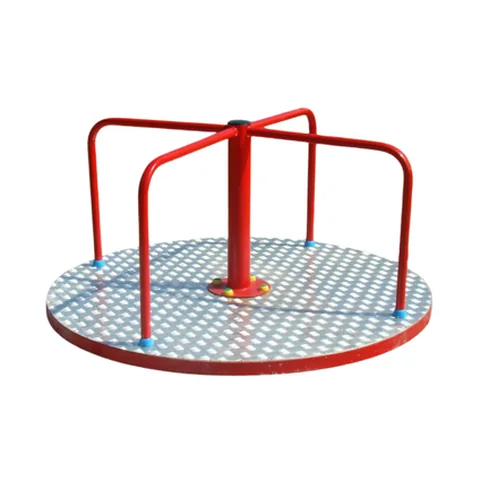
Karuzela Tarczowa
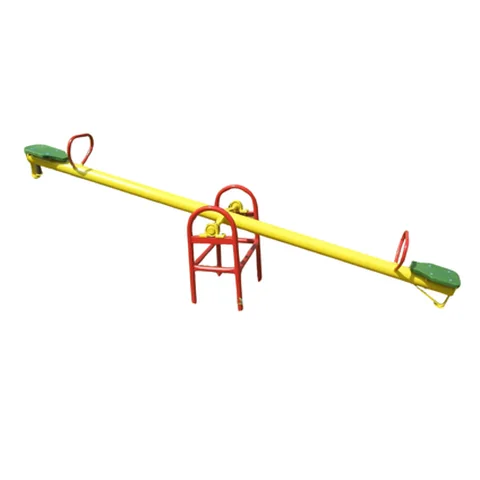
Huśtawka Ważka
Need certified equipment?
We make carousels and seesaws in Rogowo, Poland. EN 1176 certificate and the full paperwork included, free delivery across Poland, 7 working days lead time.
Read next
Installing a carousel: foundation, concrete, time
A carousel is set on a concrete foundation, levelled twice and left until the concrete cures. What to prepare, how the job runs, when children can go on.
Assembly and upkeepCarousel maintenance: what to check and how often
A working list for carousels and seesaws: tightening fastenings, judging the bearing, checking links and hangers, touching up the coating. With a schedule.