Playground inspections: how often and by whom
A certified unit does not exempt anyone from inspections. They are two different things, and confusing them goes wrong at exactly the moment something happens.
The carousel is in its second season, the children are using it, nobody has complained. Right up to the moment a weld cracks by one of the seats and somebody has to produce an inspection record that does not exist.
Inspections are the responsibility of the owner or operator of the site, not of the manufacturer of the unit. EN 1176-7 sets out three levels of inspection at different intervals. The findings of each of them go into the site file.
Three kinds of inspection
| Kind of inspection | How often | What it covers | Who does it |
|---|---|---|---|
| Routine visual | From daily to weekly, depending on how heavily the site is used | Visible damage, litter, broken glass, missing parts | Site staff, caretaker, municipal worker |
| Operational | Every 1-3 months | How the unit works, wear in moving parts, condition of connections, stability | A trained person appointed by the operator |
| Annual main | Once every 12 months | Full technical condition: foundations, corrosion, load bearing structure, safety zone still clear | A technically competent person, usually an external firm |
On top of those comes the post-installation inspection, carried out once after the unit has been assembled and before it is released for use. That one ends in the report which goes into the handover file for the investment.
Setting the interval to the site
The 1 to 3 month range for the operational inspection is not a formality to be split down the middle. It is meant to be set against how the site is actually used. A carousel in a fenced kindergarten garden used by twenty children under supervision is a different case from the same carousel on an open estate where teenagers ride it in the evenings. The first one sits comfortably at the quarterly end of the range, the second belongs at the monthly end.
Two other things push the interval down: coastal or de-iced locations, where corrosion runs faster, and any history of vandalism on the site. Both are visible from the record of past inspections, which is one more reason to keep it.
What to look at on a carousel
On rotating equipment, what turns is what wears. From our own service work, four things need attention most often:
- The central bearing. If the carousel starts to run in jerks or to make a noise, that is the first suspect. The symptom shows up weeks ahead of the failure, so it is worth acting on straight away.
- Bolted connections on seats and handrails. Vibration can loosen them over a season. Tightening them takes a quarter of an hour and is the cheapest maintenance job there is.
- The foundation. Check that the unit does not rock under pressure and that the concrete has not been exposed above ground level. Exposed concrete is a hard edge inside the impact area.
- The coating. A scratch down to bare steel is the start of corrosion. Touching it up costs a few zloty, replacing the part costs several hundred.
The last of those four behaves differently depending on what sits under the paint, which is why the same scratch is urgent on one unit and cosmetic on another. We explain the mechanism in the piece on powder coating and galvanising.
If an inspection leaves you in any doubt about a unit, take it out of use before you work out what to do next. Warning tape and a printed notice are cheaper than an accident, and they also demonstrate that the operator reacted.
The site file
The file is kept for the whole site, not for a single unit. It should hold:
- certificates and declarations of conformity for all the equipment,
- assembly and operating manuals,
- the post-installation inspection report,
- records of operational and annual inspections,
- a description of every repair carried out, with dates.
This is the first document an insurer asks for when a claim is made, and the first one requested in any investigation after an incident. Its absence does not automatically make the operator liable, but it makes it considerably harder to show that the duties were discharged.
What belongs in that file on day one is the set of documents that arrived with the equipment. Which papers those are, and how a certificate differs from a declaration of conformity, is set out in the piece on the EN 1176 certificate.
A common error: we have a certificate, so we are covered
A certificate confirms that the design of the unit met the standard at the point of manufacture. It says nothing about its condition after two winters and a thousand hours of spinning. Responsibility for the current state always sits with whoever manages the site.
The practical conclusion for a municipality or a head teacher: put the inspections in the calendar as soon as the equipment is handed over. Operational inspection quarterly, main inspection once a year, ideally in spring before the season. With a single unit that is a matter of minutes each quarter.
What overloading looks like in an inspection
Where equipment is used above its rated capacity, the symptoms turn up in the operational inspection before they turn up as a failure: play in the bearing, noise on rotation, bolts that need tightening again a month after the last time. If that pattern repeats, the interval is too long for that site, or the unit is carrying more than it was designed for. The figures behind that are set out in the piece on carousel load capacity.
Every order goes out with a manual listing the points to check. If you have not got it to hand, write to us and we will send it again, including for equipment bought years ago. Call 507 440 718 or email kontakt@bol-met.pl, every day from 08:00 to 20:00, or use the enquiry form.
Short answers
How often does a playground have to be inspected?
EN 1176-7 sets out three levels: a routine visual inspection, as often as daily where use is heavy, an operational inspection every 1-3 months, and an annual main inspection.
Who is responsible for playground inspections?
The owner or operator of the site: the municipality, the head of the school or kindergarten, the managing agent, the co-operative or the owner of the premises. The manufacturer answers for the design, not for how the equipment is used.
Do inspections have to be documented?
Yes. A site file is kept with a record of every inspection. It is the first document an insurer asks for after an incident.
Who can carry out the annual main inspection?
A person with the appropriate technical competence. In practice it is contracted to firms specialising in playground inspection or to inspectors holding a recognised qualification.
What if the site file has been lost?
Start again from the annual main inspection and open a new file with its findings. Most manufacturers will reissue the technical documentation for equipment sold years ago if you give them the details from the identification plate.
What this is based on
- EN 1176-7: guidance on installation, inspection, maintenance and operation
- EN 1176-1: playground equipment, general safety requirements
- General guidance for playground owners and site managers
Equipment mentioned in this article
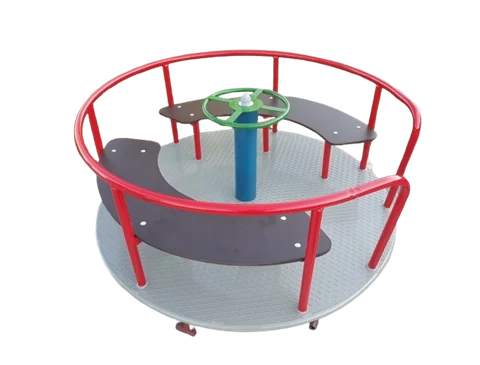
Karuzela Kołowa Trzmiel
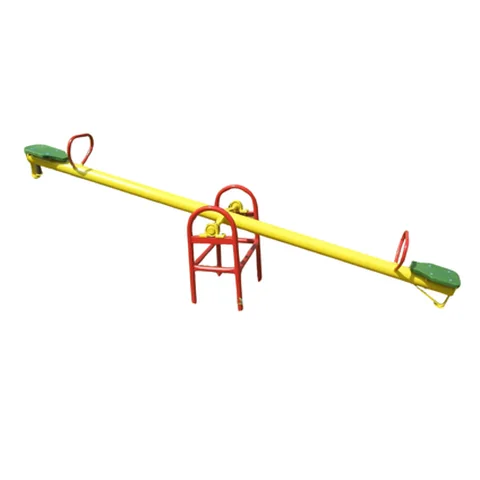
Huśtawka Ważka
Need certified equipment?
We make carousels and seesaws in Rogowo, Poland. EN 1176 certificate and the full paperwork included, free delivery across Poland, 7 working days lead time.
Read next
EN 1176 certificate: what it covers and who asks
An EN 1176 certificate is what a school, municipality or insurer asks for before use. What it covers, how it differs from a declaration, what is included.
Safety and standardsPlayground safety zone: how much ground you need
A carousel measuring 150 × 150 cm needs 550 × 550 cm of clear ground, over 30 m². Where that figure comes from and what must not stand inside the zone.